

close
Choose Your Site
Global
Social Media
Views: 0 Author: Site Editor Publish Time: 2026-01-05 Origin: Site


Sustainability in commercial kitchens isn’t just a trendy buzzword anymore—it’s basically the new normal. As more people care about the environment and rules like Environmental Preferable Purchasing (EPP) get stricter, there’s a big push to switch to greener supplies. The tough part for kitchen managers? Figuring out how to cut down on waste and microplastics without slowing things down or giving up the strength and food safety that busy kitchens depend on.
This guide evaluates the efficacy of modern plant-based alternatives against traditional industrial performance metrics. We analyze how these materials perform in high-traffic venues, from busy hotels, room service, bars, and school dining halls to large-scale production plants. By understanding the material science and regulatory landscape, buyers can select Food Service Wipes that deliver both ecological benefits and uncompromising hygiene standards.
Performance Parity: Modern wood pulp and bamboo matrices now rival synthetic blends for tensile strength and absorbency, debunking the myth that "eco-friendly" means "fragile."
Compliance is Key: "Eco-friendly" does not automatically mean "Food-Grade." Understanding NSF registration and EPA guidelines is critical for safety.
Hidden Costs of Rentals: Comparing disposable sustainable wipes against the Total Cost of Ownership (TCO) of laundered rental rags reveals efficiency gains in cross-contamination control.
Zoning Strategy: Utilizing color-coded, low-lint options is essential for adhering to HACCP (Hazard Analysis Critical Control Point) protocols in meat, dairy, and bakery plants.
Going green is no longer just about doing the right thing—it's now about keeping up with what customers expect and making sure you're following the law. More and more, diners and hotel guests are paying attention to how clean things look and what materials are being used. With certain states starting to ban single-use plastics, making the switch to compostable or biodegradable alternatives is a smart move to help your business stay ahead of the curve on new regulations.
One major issue that often flies under the radar in the food service and hospitality industries is the risk of microplastic pollution. Traditional disposable cleaning wipes, made from materials like polypropylene or polyester blends, shed tiny fibers when wiped vigorously, which can end up contaminating food contact surfaces. Over time, these microplastics build up in the environment and can even find their way into the food chain.
The good news? Plant-based alternatives can completely eliminate this risk. By switching to materials like wood pulp, bamboo, or viscose fibers, food service businesses can keep things clean and hygienic, while steering clear of synthetic pollutants. It’s a proactive way to protect both food safety and the environment, ensuring you're doing right by both your customers and the planet.
Aside from the environmental benefits, there’s a strong case to be made for efficiency. After all, ‘saving the planet’ should also mean ‘saving time’ for the kitchen staff. High-quality sustainable options, especially those made with spunlace wood pulp technology, absorb liquids way better than your typical cotton rags. This means less time spent cleaning and more time focusing on other important tasks.
Cotton rags often smear oils and grease rather than lifting them, requiring multiple passes to clean a surface effectively. In contrast, engineered multipurpose food service wipes are designed for rapid uptake of liquids and lipids. This reduces the time staff spends turning over tables or sanitizing prep stations, directly impacting labor efficiency and table turnover rates.
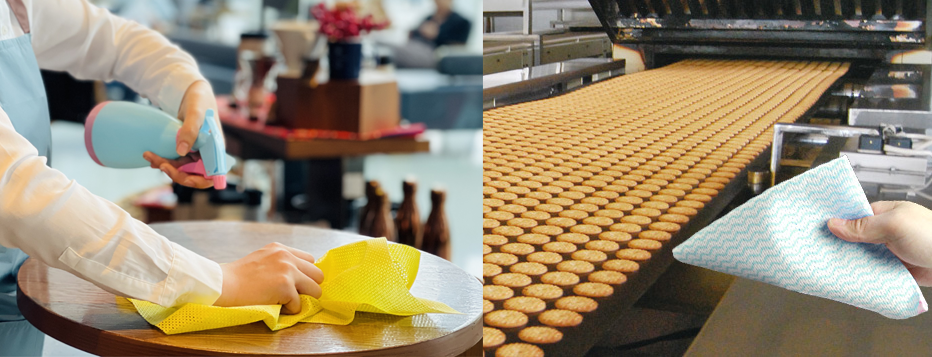
One of the main concerns people have when using environmentally friendly materials is their perceived lack of durability. However, advancements in nonwoven fabric manufacturing technology have bridged the performance gap between natural fibers and synthetic materials.
To understand why modern eco-wipes work, we must look at the fiber structure:
Absorbency: Cellulosic fibers (like wood pulp and bamboo) are naturally hydrophilic, meaning they attract and hold water. This makes them inherently superior for soaking up spills compared to plastic-based fibers, which are naturally hydrophobic and require chemical treatments to absorb water.
Wet Strength: Durability is achieved through hydro-entanglement—a process where high-pressure water jets bond fibers together without adhesives. This ensures the wipe maintains its integrity even when saturated with water or sanitizers.
The "Low-Lint" Factor: In precision areas like glass displays or stainless steel prep tables, fiber contamination is unacceptable. High-quality low-lint food service wipes minimize the risk of leaving debris behind, ensuring a pristine finish that meets health inspection standards.
Surface compatibility depends on the texture of the wiping cloth. For places like restaurants, such as wiping down tables, it's best to use a smooth-textured wiping cloth to prevent leaving streaks. However, for food production facilities, wiping cloths with a porous (textured) design are required.
These textured wipes provide mechanical scrubbing action, allowing staff to remove dried food particles and sticky residues without abrasive chemicals. Below is a comparison of common sustainable materials:
| Material Type | Absorbency | Scrubbing Power | Best Application |
|---|---|---|---|
| Spunlace Wood Pulp/Poly | High | Medium | Heavy-duty degreasing, absorbent cleanups |
| 100% Bamboo Viscose | Very High | Low-Medium | General cleaning, naturally antimicrobial properties |
| PLA (Corn Starch) | Medium | Medium | Light cleaning, fully compostable requirements |
In the regulatory world, vague terms like "green" do not hold weight during a health inspection. Procurement officers must distinguish between marketing language and regulatory classifications.
It is vital to differentiate between general cleaning wipes and those certified for food contact. Food-Contact Food Service Wipes must meet specific criteria set by the FDA and NSF.
NSF Registration: Look for NSF codes (like D2) which indicate the product is safe for use on food contact surfaces.
Rinse Requirements: Some wipes are "No-Rinse," meaning food can be placed on the surface immediately after the sanitizer dries. Others require a potable water rinse. Knowing the difference prevents chemical contamination of food.
Different zones within a facility have distinct cleaning requirements. A "one-size-fits-all" approach often leads to waste or compliance failures.
In customer-facing areas, appearance and efficiency are crucial. The wipes used here must leave no residue and dry quickly to allow for rapid table cleaning and improved turnover efficiency.
For hotel room service and cafes, the wipes themselves also impact brand image. Clean, professional disposable wipes instill confidence in customers regarding hygiene standards. Staff should use low-lint wipes to clean glass display cases and polish tabletops, ensuring no lint residue is left behind to detract from the overall aesthetics.
Commercial kitchens need wipes that can handle tough degreasing and high heat. Regular polyester wipes can actually melt if they come into contact with a hot grill or fryer basket.
In restaurant kitchens and fast food chains, cellulosic wipes are a better choice since they can handle higher temperatures than many plastics. They’re perfect for cleaning fryers, grills, and prep stations, especially where grease buildup is a problem. The material also has to be tough enough to scrub off carbonized food without tearing.
In large-scale processing, cross-contamination control is the highest priority. Here, color coded food service wipes are non-negotiable. They provide an immediate visual cue to staff and inspectors that zones are being respected.
Red: Strictly for raw meat processing areas to contain pathogens like Salmonella.
Blue: Typically used for seafood or general cleaning in low-risk areas.
Green: Reserved for produce and bakery sections to prevent cross-contact with raw animal proteins.
White: Used for general food contact surfaces and sanitation verification.
While the upfront cost per box of disposable wipes may seem higher than a bag of rags, the Total Cost of Ownership (TCO) often favors disposables when all factors are considered.
Renting cleaning cloths requires washing, which incurs hidden costs that ultimately lead to a significant increase in monthly bills. These costs include delivery fees, wastewater treatment and environmental fees, and those troublesome "loss and replacement" fees (because some cloths seem to mysteriously disappear). In addition, managing dirty cloths also requires time and effort—counting, packaging, and storing these potentially biohazardous textiles all require extra manpower.
A key advantage of disposables is consistency: "A fresh wipe every time." Laundered rags frequently return from the service with stains, holes, or trapped metal shavings from previous users. Worse, they may retain residual chemicals incompatible with your current sanitizer. Disposables guarantee a consistent, clean starting point for every task.
If your facility operates in a region with access to commercial composting, switching to certified compostable wipes can reduce waste hauling fees. By diverting organic waste (food scraps + compostable wipes) from the general landfill stream, businesses can often negotiate lower waste management rates, offsetting the material cost of the wipes.

Choosing the right hygiene products is all about finding the perfect balance. Ideal wet wipes for food service need to be strong enough to withstand wiping even when wet, safe for food contact surfaces, and aligned with your sustainability goals. Thanks to advancements in material science, plant-based fiber materials can now meet all these requirements without leaving behind microplastic pollution like traditional materials.
For procurement teams, testing the wet strength and chemical compatibility of wipes in a real-world environment is crucial. Whether in a busy school cafeteria, a high-traffic supermarket, or a small community convenience store, real-world testing will help you understand if the product truly improves operational efficiency rather than slowing things down.
If you're considering switching products, request samples of high-performance, eco-friendly wipes and compare them to your current product. You'll be able to see and feel firsthand the significant improvements in durability, cleanliness, and overall performance that modern sustainable design offers.
A: Yes, specifically heavy-duty grades (often 70gsm+) engineered with hydro-entangled fibers.These wipes are built to hold up—even when you’re scrubbing rough surfaces or dealing with stubborn, gritty messes. They’re just as strong as, if not stronger than, regular synthetic shop towels, and they don’t fall apart halfway through the job like typical paper towels do.
A: Biodegradable’ just means something will break down eventually—and that could take years, sometimes leaving stuff behind. ‘Compostable’ is different. It breaks down into non-toxic material within a set time (usually 90 to 180 days) in industrial composting conditions. For commercial kitchens, compostable is the standard you really want to look for if you’re serious about being truly sustainable.
A: Usually, yes—but there’s one thing you’ve gotta watch out for: ‘Quat binding.’ Some natural fibers can soak up the active ingredient in sanitizers, which makes them less effective. That’s why it’s important to choose food-grade wipes that are specifically treated or tested to work with quaternary ammonia or bleach, so you know your surfaces are actually getting sanitized.
A: Only when wet wipes are clearly labeled as food-grade or have obtained NSF food contact certification should they be used for food-related purposes. Some eco-friendly wet wipes are only intended for general cleaning, such as cleaning floors or tables, and are not suitable for use on surfaces that come into contact with raw food. Therefore, never ignore product instructions. Always check the manufacturer's product specifications or NSF white paper to ensure you are using the correct wipes in the correct place.
A: They provide health inspectors with clear and visual evidence that you are indeed following your HACCP plan to prevent cross-contamination. For example, finding a red cloth in the vegetable preparation area would immediately raise a red flag. Color coding helps ensure that cloths used to wipe raw chicken never end up near the salad preparation station.


