

close
Choose Your Site
Global
Social Media
Views: 0 Author: Site Editor Publish Time: 2026-01-09 Origin: Site


Over the years, the debate surrounding disposable versus reusable products has changed considerably. For a long time, business owners and those genuinely concerned about hygiene have faced a dilemma: either maintain extremely high hygiene standards or strive to be more environmentally friendly. It always seemed to be a trade-off. Choosing disposable products generates more waste, while choosing reusable products requires significant water consumption and constant, troublesome cleaning.
But this perception is changing. Today, thanks to the emergence of biodegradable plant fibers, "disposable" no longer automatically equates to plastic waste. On the other hand, when considering the water and energy consumption required to wash and sanitize fabrics, "reusable" is not always the more environmentally friendly option. Therefore, it's time to re-examine the cleaning and drying tools we use every day.
This guide evaluates Disposable Towels against traditional cotton alternatives across three critical dimensions: Hygiene/Sterility, Total Cost of Ownership (TCO), and Environmental Life Cycle Assessment (LCA). Whether you operate a high-traffic salon, manage a hotel, or simply want better skincare at home, this comparison reveals the optimal choice for your specific needs.
Hygiene Check: Disposable towels are the safest bet when it comes to avoiding cross-contamination—especially important for acne-prone skin and clean, sterile salon settings.
Sustainability Reality: Cotton only really wins on waste reduction if it’s washed efficiently. In places where water is limited or washing takes a lot of energy, biodegradable disposables actually make more sense.
Cost Truth: Cotton towels seem cheaper upfront, but they come with hidden costs like labor, water, electricity, and detergent. Disposables, on the other hand, make budgeting easier since you know the cost every time you use one.
Best Way to Use Them: Go with disposable towels for face drying, salon chemical treatments, and travel. Save cotton towels for general cleaning jobs and tougher scrubbing tasks.
When we discuss cleanliness, we often confuse "clean looking" with "sterile." Cotton towels may appear clean after a wash cycle, yet they often harbor microscopic remnants of their previous use. This distinction is the primary driver behind the shift toward single-use alternatives in professional and clinical settings.
The characteristics of cotton towels mean they easily absorb moisture. While this is beneficial for drying, it also makes them an ideal breeding ground for bacteria. Even if a cotton towel is only damp for a short time, microorganisms will begin to grow in the spaces between the fibers. That familiar sour smell you sometimes notice? That's right—that's a sign of bacterial growth, even if the towel feels dry to the touch.
Once a towel emits this odor, it's no longer clean. Using such a towel can spread bacteria like E. coli or staphylococcus from your hands or other surfaces to your face or hair. In a humid bathroom, hanging cotton towels can even absorb bacteria from the air, completely defeating the purpose of using a towel—to stay clean. Disposable towels eliminate this risk, providing you with a clean and hygienic surface every time.
In a commercial setting, the risks are even higher. For spas, reusing towels on multiple customers or failing to wash towels at disinfecting temperatures can lead to serious liability risks. To kill stubborn bacteria and fungi, laundry cycles must reach temperatures exceeding 140°F (60°C) and use bleach. Many household and light-duty commercial washing machines cannot consistently maintain such high temperatures.
In the skincare field, dermatologists are increasingly recommending the use of disposable face towels for treating acne. Acne is often a recurring infection process. Wiping the face with towels contaminated with dead skin cells or bacteria can hinder the healing process. Switching to disposable face towels can effectively break this vicious cycle.
Using disposable bath towels or hand towels that have never been used by anyone else offers significant benefits, both psychologically and practically. This "freshness guarantee" is an important indicator of the high quality of service provided by upscale hotels. Furthermore, disposable items eliminate the problem of detergent residue. Chemicals from detergents remaining in cotton fibers can irritate sensitive skin or alter the chemical composition of hair dyes, leading to unpredictable results in hair styling services.
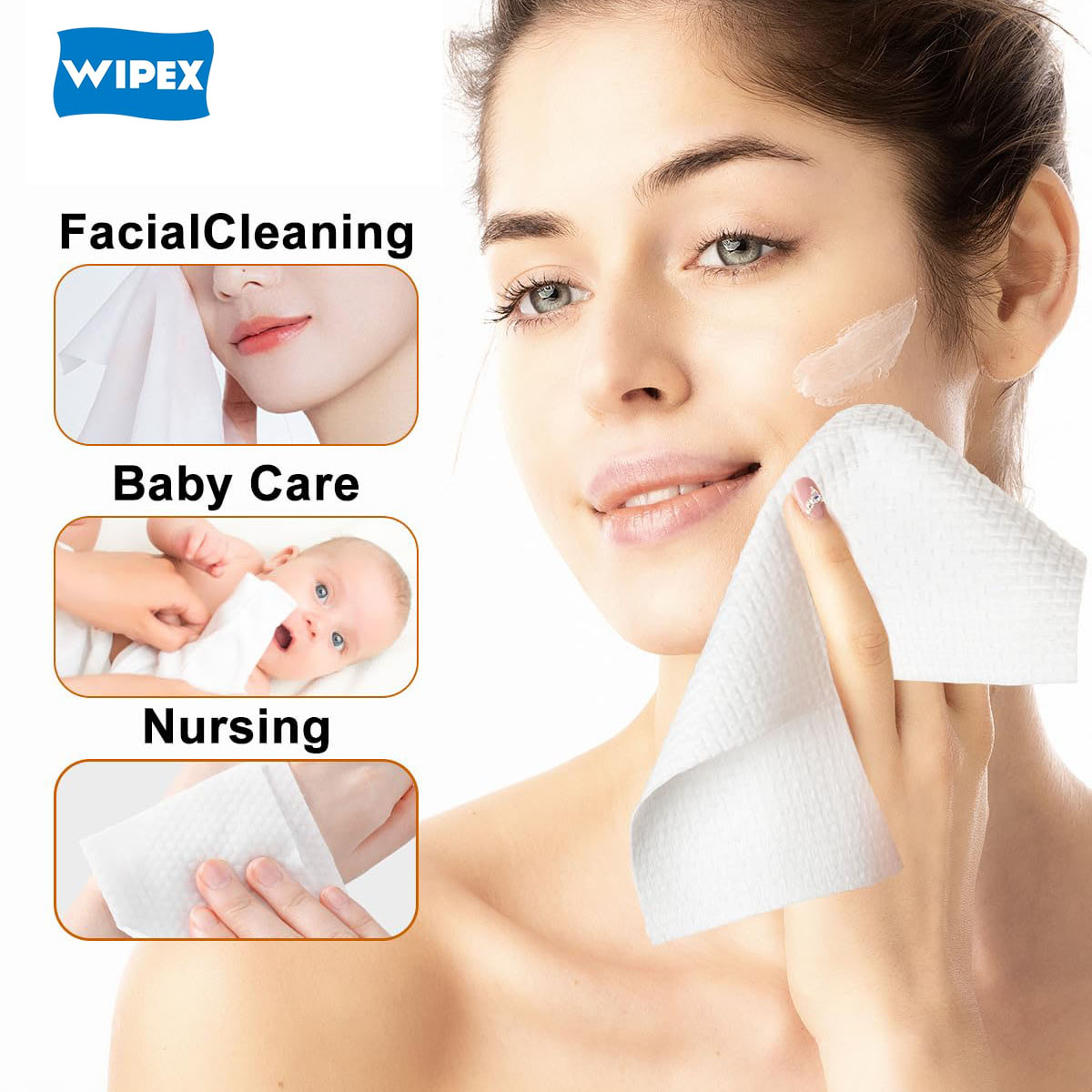
Neither material is superior in every single situation. The choice depends heavily on the mechanical action required and the nature of the substance being removed. We can break this down into three common scenarios.
Recommendation: Disposable.
In the beauty world, speed and precision really matter. High-quality disposable salon towels, usually made from wood pulp or bamboo fibers, are super absorbent. They soak up water way faster than cotton and don’t need a lot of rough rubbing. That means less frizz, shorter blow-dry time, and quicker chair turnover for stylists.
Chemical services like hair dye or bleach are also brutal on regular towels. One splash of bleach and a black cotton towel is basically done—no longer fit for a high-end service. Disposable towels take that stress off the table. There’s no worrying about permanent stains or ruined inventory, which for hair and beauty salons directly translates into saving money and protecting profits.
Recommendation: Cotton/Microfiber.
When you’re dealing with dried-on food, mud, or really tough grime, the way a towel is built actually makes a big difference. Cotton loops and microfiber towels have more ‘grip,’ which makes them better for scrubbing stubborn messes or picking up dust from dry surfaces. A disposable towel can rip if you’re putting a lot of elbow grease into cleaning a floor or stovetop.
That said, there’s one big exception—biohazards. If you’re cleaning up oil, grease, or any kind of bodily fluid, disposables are the safer move. You can wipe it up, toss the towel right away, and move on, without risking spreading that mess to your washing machine or other laundry.
Recommendation: Hybrid.
When it comes to hotels and travel, doing laundry can become complicated. If you're staying in a remote guesthouse, camping, or staying in a hostel, finding a place to wash towels isn't always easy. That's where disposable hotel towel sets come in handy. They're lightweight, take up almost no luggage space, and you don't have to lug around wet towels.
There's nothing more annoying than stuffing a wet towel into your suitcase. It smells, it wets your clothes, and it's just a mess. Disposable towels completely solve this problem, keeping your suitcase dry when you get home and saving you one less thing to worry about.

The most common argument against disposables is waste generation. While visible waste is a valid concern, a true Life Cycle Assessment (LCA) looks at the invisible impact: energy, water, and chemical usage. When analyzed deeply, the "green" choice is not always obvious.
Sure, making a single-use towel takes energy—but keeping a reusable towel clean over time actually burns way more. A commercial cotton towel gets washed and dried thousands of times. All that hot water, high heat, and hours of industrial dryers use a ton of electricity and gas.
In fact, some data shows that high-heat commercial laundering can leave a bigger carbon footprint than producing compostable, single-use towels. And in areas where electricity still comes from fossil fuels, the nonstop energy demand of laundry machines can outweigh the energy it takes to make a plant-based disposable towel in the first place.
The global water shortage is becoming increasingly severe, and traditional laundry methods consume vast amounts of water. Switching to disposable towels can save a significant amount of water for each customer. For a salon that serves approximately 50 customers daily, eliminating the laundry process can save thousands of gallons of water annually.
This is not just about water consumption, but also about wastewater discharge. During the laundry process, detergents, bleaches, and fabric softeners are released into the sewage system, and synthetic fiber towels release microplastics with each wash. Using biodegradable disposable towels avoids these problems, helping to reduce chemical emissions and lessen the burden on local wastewater treatment systems.
We must acknowledge its drawbacks: traditional synthetic fiber or plastic blend disposable products are not recyclable and contribute to landfill waste. This is the main negative impact of these products.
The solution lies in material selection. Choosing FSC-certified, 100% biodegradable or compostable plant fiber towels avoids the landfill problem. These products decompose naturally, returning carbon elements to the soil instead of persisting for extended periods like plastic waste. The industry is rapidly shifting towards these environmentally friendly materials to balance convenience and environmental protection.
Business owners often look at the price per box of towels and assume disposables are expensive. This is a "sticker price" fallacy. To understand the real cost, you must calculate the Total Cost of Ownership (TCO), which includes labor, utilities, and replacement.
Cotton towels look cheap at first since you can use them over and over. But once you look past the purchase price, the real costs start stacking up. You’re paying for water, electricity, detergent, machine upkeep—and most importantly, staff time. Every hour spent washing, folding, and loading towels is an hour not spent taking care of customers.
Disposable options cost more upfront because you’re restocking them regularly. But there are no utility bills, no laundry machines, and no labor tied to them. The cost stays predictable, so you know exactly what it takes to serve each client, making it way easier to plan and control your budget.
| Cost Category | Cotton Towels | Disposable Towels |
|---|---|---|
| Upfront Investment | High (Large initial stock required) | Low (Pay as you go) |
| Labor Cost | High (Washing, drying, folding) | Zero (Use and toss) |
| Utilities (Water/Energy) | High (Daily laundry cycles) | Zero |
| Inventory Loss | Moderate (Stains, fraying, theft) | None (100% yield) |
Cotton requires replacement every 1-2 years due to fraying, stubborn staining, and "graying" (where white towels turn dingy). Every towel thrown away due to a hair dye stain is a financial loss. Disposables offer 100% yield. There are no "rag pile" losses because every unit purchased is used for revenue generation.
Real estate is expensive. In many salons and spas, valuable square footage is dedicated to washer and dryer setups. By switching to a disposable spa towel system, this space can be reclaimed. A laundry room can be converted into an extra treatment room or a retail display, directly generating revenue rather than consuming resources.
Making the switch does not have to be all or nothing. Use this framework to decide where each material fits into your operations.
Soil Type: Is the mess biological or chemical (e.g., facial treatments, hair dye)? Go Disposable. Is it physical dust and grime? Go Cotton.
Volume: Do you lack the staff or machinery to handle 50+ loads of laundry a week? If yes, disposables will relieve a massive operational bottleneck.
Client Perception: Does your clientele value old-school "fluffy luxury" (Cotton) or do they prioritize "clinical hygiene" and safety (Disposable)?
The Hybrid Approach: A lot of businesses find a sweet spot by keeping cotton towels for dry services or little luxury touches—like a warm neck roll—while switching to disposable spa towels for wet treatments and chemical services. This cuts way down on laundry without giving up that classic, high-end feel.
What to Look For When Buying: When you’re shopping for disposables, keep an eye out for words like biodegradable, viscose/bamboo, and lint-free. Those labels usually mean the towel will absorb well and feel similar to cotton, so your customers won’t notice any drop in comfort or quality.
This debate is no longer simply about "cheap paper towels versus premium towels." In reality, it's about choosing between ultra-clean disposable products and durable, long-lasting towels. With stricter hygiene standards and rising water costs, disposable products are becoming increasingly attractive.
From the perspective of skincare, chemical treatment, and ease of use, disposable towels are the future. They are safe, hygienic, and easy to handle. For deep cleaning or situations requiring the classic soft feel of a towel, cotton towels still remain relevant.
If you're still undecided, take a closer look at the true cost of laundry. Check your electricity bills and the labor costs associated with washing and folding towels. You might be surprised to learn that switching to environmentally friendly disposable products not only saves you money but also benefits the planet.
A: Not necessarily. If you choose 100% plant-based and compostable towels, they can be more environmentally friendly than cotton ones, considering the energy and water wasted when washing them frequently in hot water. The key is to select biodegradable materials instead of synthetic blends to avoid the accumulation of waste in landfills.
A: Yes, and often they're even better. High-quality disposable hairdressing towels are particularly absorbent. They effectively soak up moisture, thus reducing water retention in the hair. This speeds up the drying process and minimizes hair damage caused by prolonged blow-drying.
A: They eliminate the risk of introducing bacteria, dead skin cells, or detergent residue from a used cloth back onto your clean face. This breaks the cycle of reinfection, providing a sterile foundation for your skincare routine every single time.
A: While the per-unit cost seems higher, they eliminate laundry bills, detergent costs, and staff hours spent folding towels. When you factor in these hidden savings, disposables often result in a neutral or lower Total Cost of Ownership compared to maintaining a cotton inventory.
A: Some heavy-duty disposable towels, such as non-woven types, can be rinsed and reused for cleaning tasks like wiping counters. However, for hygiene purposes involving the face or body, single-use is strongly recommended to maintain sterility.


